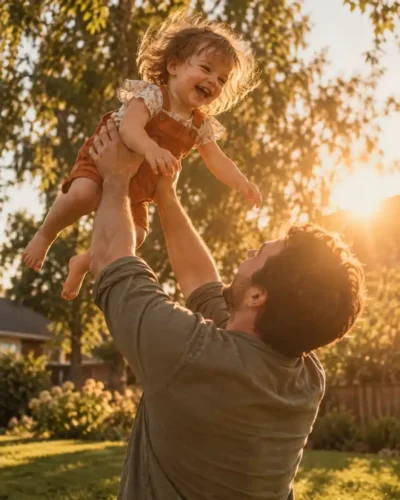
Family Traditions: 60 Ideas to Start This Year
60 family traditions ideas to start this year: weekly rituals, birthday and holiday traditions, milestone moments and free ideas, plus how to make them stick.
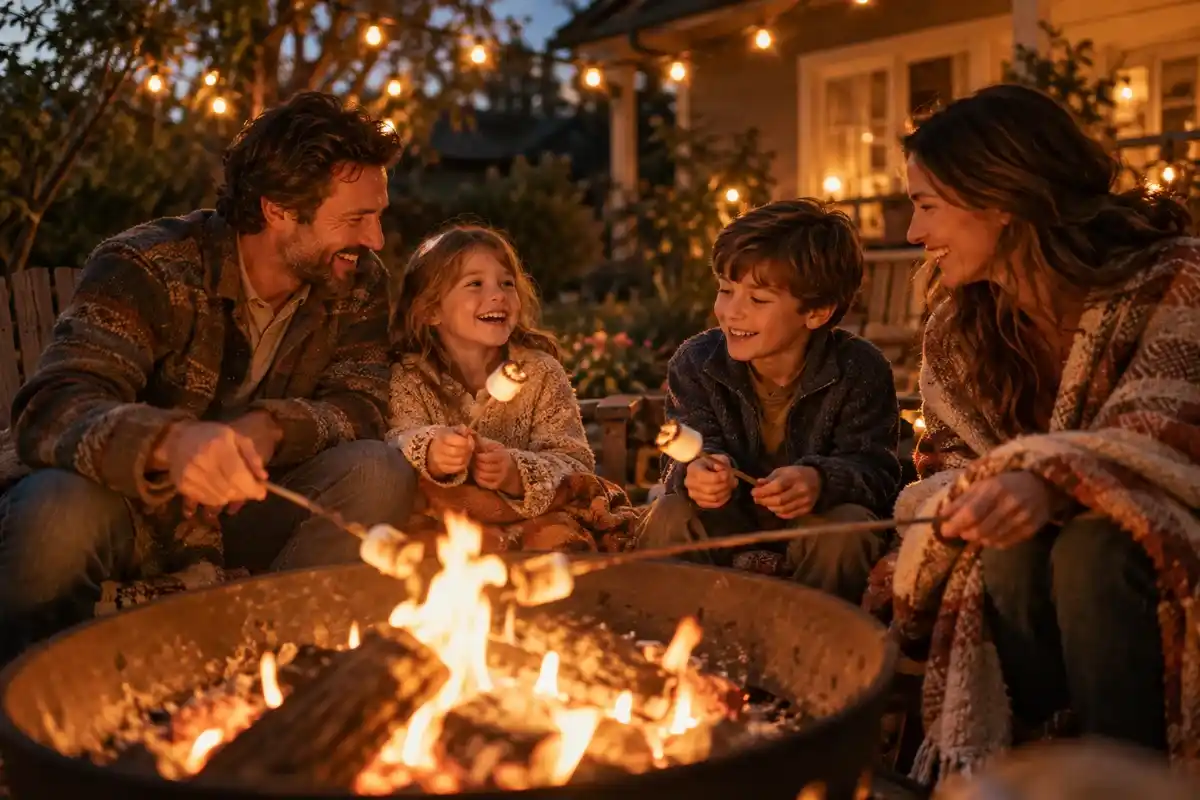
Ask adults about their favorite childhood memories and you’ll rarely hear about expensive vacations. Instead, you’ll hear about Friday pizza nights, the song Dad always sang in the car, the pancakes shaped like the first letter of their name. Those are family traditions — small, repeated moments that quietly become the story of a childhood. Here are 60 family traditions ideas you can start this year, sorted by how often you’ll do them, plus a simple way to make them stick.
Quick answer
A family tradition is any activity your family repeats on purpose — weekly, yearly or at a milestone — that carries meaning for you. In fact, the best ones are simple, cheap and easy to repeat: a weekly game night, a birthday breakfast ritual, a first-day-of-school photo in the same spot, a yearly letter or time capsule. Start with one or two, name them, and document them so your kids can look back on them.
Key takeaways
- Traditions give kids a sense of belonging, rhythm and also something to look forward to.
- Small weekly rituals often matter more than big yearly events.
- The best traditions are easy enough to keep doing when life gets busy.
- Then, photos plus a short note each time turn a tradition into a timeline your kids will treasure.
What is a family tradition?
A family tradition is a practice your family repeats intentionally and that holds meaning beyond the activity itself. It can be tied to a date (birthdays, holidays), a rhythm (every Sunday, every night at bedtime) or a milestone (the first day of school, losing a tooth). What makes it a tradition isn’t how big it is — it’s that everyone knows it will happen again, and it feels like “our thing.”
The American Academy of Pediatrics notes that family rituals give children a sense of identity and security — which is exactly why family traditions are worth the small effort.
First, some traditions are inherited from grandparents and cultural heritage. Others, however, start by accident: you made pancakes one snowy morning, the kids asked for them the next snowy morning, and now snow means pancakes. Either way, both kinds count.
Why family traditions matter for kids
- Belonging. Traditions tell kids “this is who we are.” They create shared language, inside jokes and a family identity.
- Predictability. Repeated rituals give children a comforting rhythm, especially during changes like a new school or a move.
- Connection. A tradition guarantees time together, even when seasons get busy.
- Memories. In other words, repetition is how moments become memories. One pizza night is a dinner; fifty pizza nights are a childhood.
Weekly and everyday family traditions
These are the traditions kids remember most, because they happen so often.
- Friday pizza and movie night — then let a different family member pick the movie each week.
- Sunday pancake breakfast — shape the pancakes, add a “special topping of the week.”
- Game night — board games, cards or charades, while phones rest in a basket.
- Highs and lows at dinner — everyone shares the best and hardest part of their day.
- Saturday morning adventure walk — the same trail, so you see it change through every season.
- Bedtime three — three things you’re grateful for before lights out.
- Library day — one trip a week, and each person also picks one new book.
- Family dance party — five minutes, loud music, while cleaning up.
- Taco Tuesday (or any themed dinner) — kids help cook, so it feels like theirs.
- Car-ride question — one fun question on every school drive. (Need ideas? Try our 100+ questions to ask kids.)
- Special handshake — invent one for each child.
- “Yes day” once a month — within reasonable limits, the kids plan the day.
Looking for fresh ideas every week? Childhood Milestones suggests activities and traditions matched to your child’s age — and saves every one you complete.
Birthday traditions
- Birthday interview — ask the same 10–15 questions every year, then save the answers.
- Doorway height chart — measure on the same wall every birthday.
- Birthday breakfast in bed or the birthday kid’s favorite breakfast, whatever it is.
- A yearly letter — write your child a letter on each birthday (see how to write one, with examples).
- Balloon avalanche — fill their room with balloons while they sleep.
- Same-spot photo — a picture in the same chair or doorway every year, so growth is easy to see.
- Birthday “yes” list — the birthday kid chooses dinner, activity and dessert.
- Half-birthday treat — half a cake, half a song, and of course a full celebration. Kids love it.
Seasonal and holiday family traditions
- First-day-of-spring picnic — even if it’s in the living room.
- Summer bucket list — write it together on the last day of school and check items off all summer.
- Backyard campout — tent, flashlights and s’mores, at least once a summer.
- First swim of the year — celebrate it like a holiday.
- Apple or pumpkin picking in the fall, with a photo in the same spot every year.
- Leaf-pile jumping day — first rake, then jump, then repeat.
- Thanksgiving gratitude tablecloth — everyone writes what they’re thankful for with fabric markers; the tablecloth becomes a record of years.
- First snow hot cocoa — the first snowfall means cocoa, no matter what.
- New Year’s time capsule — each person adds a note, a drawing and a small object from the year.
- Valentine’s family breakfast — heart-shaped anything.
- Earth Day tree planting — or one plant per year on the balcony.
- Last-day-of-school celebration — ice cream and a “summer kickoff” walk.
Christmas family traditions
- Matching pajamas on Christmas Eve — plus a family photo in them, of course.
- A new ornament every year for each child, labeled with the year. When they move out, they take their collection.
- Christmas lights drive with cocoa in travel mugs.
- Advent kindness calendar — one small act of kindness per day.
- Cookie-baking day with a family recipe passed down from a grandparent.
- Read the same Christmas story every Christmas Eve.
Milestone traditions
Milestone traditions mark the big “firsts” and, similarly, the big transitions. They’re powerful because they help kids see how much they’ve grown.
- First-day-of-school photo in the same spot, holding a sign with their grade and dream job.
- Lost-tooth tradition — a special tooth box and a note from the tooth fairy.
- “First time” celebrations — first bike ride without training wheels, first time swimming alone.
- Report card dinner — celebrate effort rather than grades.
- Coming-of-age trip — a one-on-one trip with a parent at a chosen age (like 10 or 13).
- Letters on big days — graduation, first job, first car.
- Family “hall of fame” wall — rotating artwork, certificates and proud moments.
- 18th birthday memory box — hand over the letters, recordings and keepsakes you’ve saved.
Your family’s childhood map
Finally, turn every tradition into a memory you can revisit.
Snap a photo, add two lines about what happened, record a laugh. Year after year, your traditions build a timeline your kids will love scrolling through when they’re grown.
Free and low-cost family traditions
- Sunset watching on the longest day of the year.
- Family book club — everyone reads the same book (or listens to the audiobook).
- Grandparent story night — call or visit and ask for one story from their childhood. Then record it.
- Kitchen restaurant night — kids design the menu, take orders and serve.
- Blanket fort Friday — once a month, everyone sleeps in the living room fort.
- Gratitude jar — notes all year, read them together on New Year’s Eve.
- Star-gazing night — lie on a blanket and make up constellations.
- Volunteer day — pick a cause together each year.
- Home movie premiere — film a short family movie, then “premiere” it with popcorn.
- The family song — one song that always gets played on road trips.
- Rainy day museum — kids curate a “museum” of their favorite things.
- Sunday phone-free hour — board games, puzzles or just talking.
- Heritage dinner — cook a dish from your family’s culture and share the story behind it.
- Year-in-review night — look back at the photos and memories you saved and pick the family’s “top 10 moments.”
How to start a family tradition that actually sticks
- Start small. After all, one weekly tradition you keep beats five you abandon in March.
- Tie it to an anchor. Link it to something that already happens — Fridays, the first snow, the first day of school.
- Name it. “Taco Tuesday” or “Fort Friday” turns an activity into an identity.
- Let kids co-create. Traditions they help design are, therefore, the ones they’ll protect.
- Adapt as they grow. For example, bath-time songs become car-ride playlists. The spirit stays; the format changes.
- Document it. A quick photo and a sentence each time — “Fort Friday #23: Leo insisted the fort needed a doorbell” — becomes a priceless record. Keeping them on one timeline, like in Childhood Milestones, means you’ll actually find them again.
Traditions for different ages
- Toddlers: repetition is the whole point — bedtime songs, bath-time games, the same Saturday walk.
- School-age kids: let them lead: themed dinners, game nights, birthday interviews.
- Tweens and teens: keep traditions light and optional; one-on-one outings, a shared playlist or a yearly trip can become the ones they fight to keep.
Traditions for busy, blended and long-distance families
Of course, traditions don’t require a perfect schedule or everyone under one roof. Some of the most meaningful ones are built around real-life constraints:
- Two households: give each home its own tradition (Mom’s house has Sunday waffles; Dad’s house has Thursday soccer in the park). Kids don’t need matching rituals; instead, they need reliable ones.
- Long-distance grandparents: schedule a monthly video call where Grandma reads a bedtime story, or trade postcards back and forth. Ask grandparents to record stories from their own childhood so your kids can hear them in their voice.
- Shift work and busy seasons: shrink the tradition instead of skipping it. Pizza night can become a 15-minute “pizza toast picnic” on the floor. What matters is that it still happens.
- New stepfamilies: invite everyone to bring one tradition from their “before,” then create one brand-new tradition together that belongs to all of you.
When a tradition stops working
Eventually, it’s normal for traditions to fade. A ten-year-old may roll their eyes at the bath-time song that delighted them at three. Instead of forcing it, ask your kids what they’d like to keep, change or retire. Often the answer surprises you: many kids quietly cherish the traditions they pretend to be too old for. And when a tradition does end, it doesn’t disappear — the photos, notes and recordings you saved become part of the story you’ll tell for years. That is exactly why documenting traditions matters: the ritual may change, but the memory stays.
A simple habit helps: at the end of each year, look back at the moments you saved and ask everyone to vote for their favorite tradition of the year. It only takes ten minutes, so it’s an easy way to see which rituals your family truly loves.
Frequently asked questions
What are some examples of family traditions?
Common examples include weekly pizza and movie nights, Sunday pancake breakfasts, birthday interviews, first-day-of-school photos, a new Christmas ornament every year, summer bucket lists, gratitude jars and yearly time capsules.
How do you start a new family tradition?
Choose one simple activity, tie it to an existing rhythm (like Fridays or the first snow), give it a name, involve your kids in shaping it, and repeat it consistently. Documenting it each time helps it become part of your family story.
Why are family traditions important?
Traditions give children a sense of belonging and predictability, guarantee regular time together, and turn everyday moments into lasting memories and a shared family identity.
What are good family traditions for teenagers?
Teens often enjoy low-pressure traditions: a monthly one-on-one breakfast, a shared road-trip playlist, a yearly trip they help plan, late-night snack talks, or volunteering together for a cause they care about.

What to Write in a Baby Book: Page-by-Page Ideas & Prompts
What to write in a baby book, page by page: birth story, month-by-month prompts, baby’s firsts, letters and a guilt-free way to…
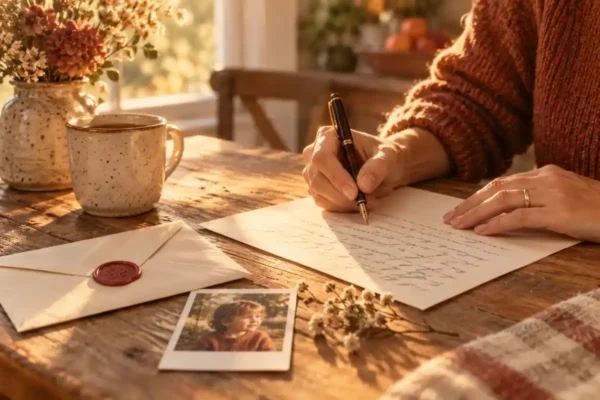
Letter to My Daughter or Son: How to Write One (+ Examples)
How to write a letter to your daughter or son they’ll keep forever: 12 prompts, step-by-step tips and heartfelt examples, from newborn…
100+ Questions to Ask Kids (By Age): Fun, Deep & Everyday
Fun, deep and everyday questions to ask kids, organized by age from toddlers to teens, plus tips to get real answers and…
Eighteen years go faster than you think. Start saving their story today.
Discover meaningful things to do together, capture the milestones that matter and keep photos, stories and voice memories on one beautiful timeline — from birth to 18.