
Activities for Kids: 25 Ideas Sorted by Age
25 activities for kids sorted by age, from sensory play for toddlers to real projects for tweens, with the skill each one builds and what you need.

The best activities for kids aren’t the most expensive or the most Pinterest-worthy. They’re the ones that match where your child is right now: what their hands can do, how long they can focus and what makes them light up. Here are 25 activities for kids sorted by age, from toddlers to tweens, each with the skill it builds and what you need.
Quick answer
Good activities for kids depend on age. Toddlers (1–3) learn through sensory play like sorting, stacking and water play. Preschoolers (3–5) love pretend play, simple crafts and movement games. School-age kids (6–8) enjoy building, experiments and board games, while big kids (9–12) thrive on real projects like cooking a meal, coding or starting a collection.
Key takeaways
- A rough rule for attention span: a few minutes per year of age for focused tasks.
- Open-ended materials (blocks, paper, boxes) grow with your child.
- Let kids lead; your job is to set up the space and join in.
- Repeat favorites. Repetition is how young children learn.
Activities for toddlers (ages 1–3)
Toddlers learn with their whole body. Keep activities short (5 to 10 minutes), hands-on and safe to mouth. Always supervise small items, which are a choking hazard under age 3.
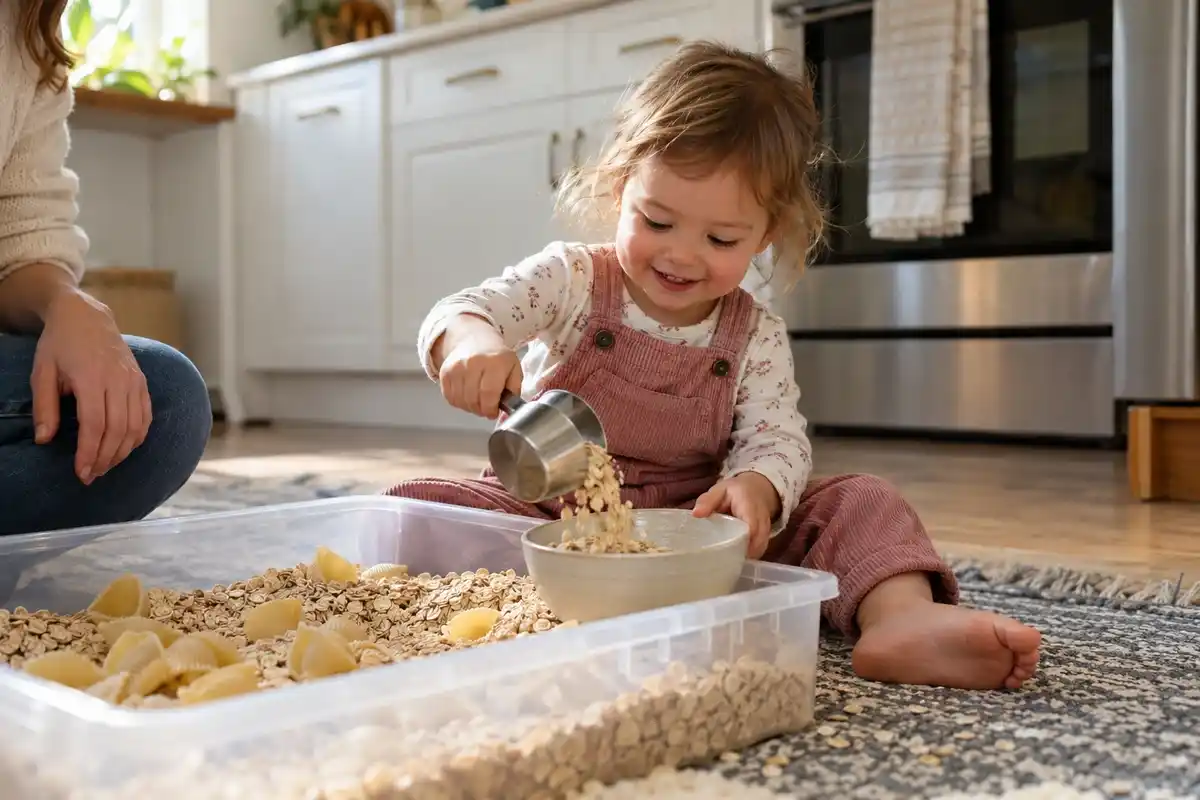
- Sensory bin — dry pasta, oats or water with cups and scoops. Builds: fine motor skills, cause and effect.
- Stack and crash — towers of blocks or plastic cups to knock down. Builds: hand-eye coordination.
- Sticker peeling — big stickers on paper or a window. Builds: pincer grasp, focus.
- Ball roll — roll a ball back and forth, then down a cardboard ramp. Builds: turn-taking, gross motor skills.
- Bath-time painting — foam letters or washable bath paint. Builds: creativity, early letters.
- Animal sounds walk — point at pictures or real animals and make the sounds together. Builds: language.
- Dance party — clap, stomp and freeze. Builds: rhythm, body awareness, listening.
Activities for preschoolers (ages 3–5)
Preschoolers are full of imagination and questions. They can follow simple rules and focus for 10 to 20 minutes on something they love.
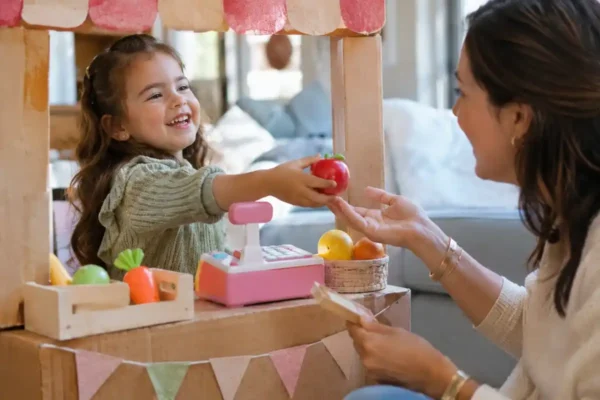
- Pretend store or restaurant — real empty boxes, play money and a menu. Builds: language, early math, social skills.
- Playdough creations — add cookie cutters, a garlic press or rolling pins. Builds: hand strength for writing.
- Color hunt — find five things of one color around the house. Builds: vocabulary, attention.
- Simple obstacle course — crawl under, jump over, walk along tape. Builds: balance, following directions.
- Nature collage — glue leaves, petals and twigs on cardboard. Builds: creativity, sorting.
- Shadow puppets — a flashlight and a blank wall at bedtime. Builds: storytelling.
Ideas matched to your child’s exact age. Childhood Milestones suggests new activities as your child grows and lets you save each one with a photo and a note.
Activities for school-age kids (ages 6–8)
Early elementary kids love rules, challenges and real results. They can follow multi-step instructions and work for 20 to 30 minutes.
- Kitchen science — baking soda volcanoes, oobleck or walking water. Builds: curiosity, scientific thinking.
- Building challenge — the tallest LEGO tower or a bridge that holds a book. Builds: problem-solving.
- Board and card games — Uno, Connect Four, Go Fish. Builds: strategy, math, handling losing.
- Bake with a recipe — they read, measure and stir. Builds: reading, fractions.
- Write and illustrate a book — fold paper into a mini book. Builds: writing, sequencing.
- Backyard bug safari — a magnifying glass and a notebook to draw what they find. Builds: observation.
Activities for big kids (ages 9–12)
Tweens want independence and real responsibility. The best activities give them a project they own from start to finish.
- Cook a family dinner — they plan the menu, make a list and cook (with you nearby for knives and heat). Builds: planning, confidence.
- Learn to code — free platforms like Scratch let them make games and animations. Builds: logic, creativity.
- Start a collection or hobby — rocks, coins, photography, origami. Builds: patience, expertise.
- Build a marble run or Rube Goldberg machine — tubes, tape and household items. Builds: engineering, trial and error.
- Family podcast or interview — record grandparents answering questions. Builds: listening, family connection.
- Plan a day trip — give them a budget and a map. Builds: money skills, responsibility.

How to choose the right activity for your child
- Watch their current obsession. Dinosaurs, trucks or princesses? Build the activity around it.
- Aim for “just right” difficulty. If they’re frustrated, simplify. If they’re bored, add a challenge.
- Balance screens and play. The American Academy of Pediatrics recommends creating a family media plan so screens don’t crowd out sleep, play and time together.
- Mix energy levels. Pair an active game with a calm one, especially indoors. Try our rainy day activities for kids for more.
- Join in. Your attention is what makes any activity special. For outings beyond the house, see our list of things to do with kids.
Turn activities into memories
The pasta sensory bin and the first family dinner your 11-year-old cooked are the moments childhood is made of. However, they blur together fast. Snap a photo, write what your child said, and note their age. Years later, you’ll see exactly how they grew, one activity at a time.
Discover, play, remember
Activities by age, memories that last
Childhood Milestones gives you age-based activity ideas and a private timeline to save the photos, voice notes and stories from each one.
Frequently asked questions
What are good activities for kids at home?
Sensory bins and stacking for toddlers, pretend play and playdough for preschoolers, kitchen science and building challenges for ages 6 to 8, and cooking, coding or a hobby for big kids.
How long can kids focus on an activity?
It varies a lot by child and interest. As a rough guide, toddlers manage about 5 to 10 minutes, preschoolers 10 to 20, and school-age kids 20 to 30 minutes or more on something they enjoy.
What are screen-free activities for kids?
Board games, building with blocks, crafts, baking, nature walks, reading, pretend play and science experiments are all screen-free and work for many ages.
What activities help child development?
Play is how kids learn. Sensory play builds fine motor skills, pretend play builds language and social skills, building and games build problem-solving, and real projects build confidence.

Activities for 1-Year-Olds: 25 Simple Ideas by Skill
25 simple activities for 1 year olds, grouped by skill, with safety tips for playing at home.
Activities for 3-Year-Olds: 25 Fun Ideas to Learn and Play
25 activities for 3 year olds: art, pretend play, movement and early learning ideas using things you already have.

Things to Do With Toddlers: 30 Easy Ideas at Home and Out
30 easy things to do with toddlers at home, outdoors and around town, with simple setups and safety tips.
Eighteen years go faster than you think. Start saving their story today.
Discover meaningful things to do together, capture the milestones that matter and keep photos, stories and voice memories on one beautiful timeline — from birth to 18.