
Baby Memory Book: What to Include + Paper vs Digital
What to put in a baby memory book, paper vs digital compared, and tips to choose and finish yours.

Shopping for a baby memory book is surprisingly confusing: guided paper books, blank journals, photo books and apps all promise to save your baby’s first years. The right choice depends on how much time you have and how you like to remember. This guide explains what to include in a baby memory book, compares paper vs digital side by side and helps you pick the one you’ll actually fill.
Quick answer
A baby memory book should include the birth story, monthly updates, milestones and firsts with dates, photos, family details, keepsakes and letters to your child. Paper baby memory books are tangible and beautiful but easy to fall behind on; digital ones are faster, hold video and voice, and are easy to share. Many parents use both: record digitally, print the highlights.
Key takeaways
- The best baby memory book is the one you’ll keep up with during the newborn months.
- Look for prompts, enough space for photos and room beyond the first year.
- Digital books capture what paper can’t: video, voice and quick daily notes.
- A hybrid approach gives you speed now and a printed book later.
What to include in a baby memory book
Whatever format you choose, these are the sections parents treasure most later:
- Before you were born: how you found out, pregnancy notes and ultrasound images. Our pregnancy journal prompts help here.
- Birth story: date, time, weight, length, place and the story in your words.
- Family tree: parents, grandparents and siblings, with photos.
- Monthly updates: one photo, size, new skills and favorite things.
- Milestones and firsts: smile, laugh, roll, crawl, first word, first steps, each with a date. Use our baby milestones guide as a checklist.
- Holidays and firsts in the world: first Christmas, first trip, first birthday.
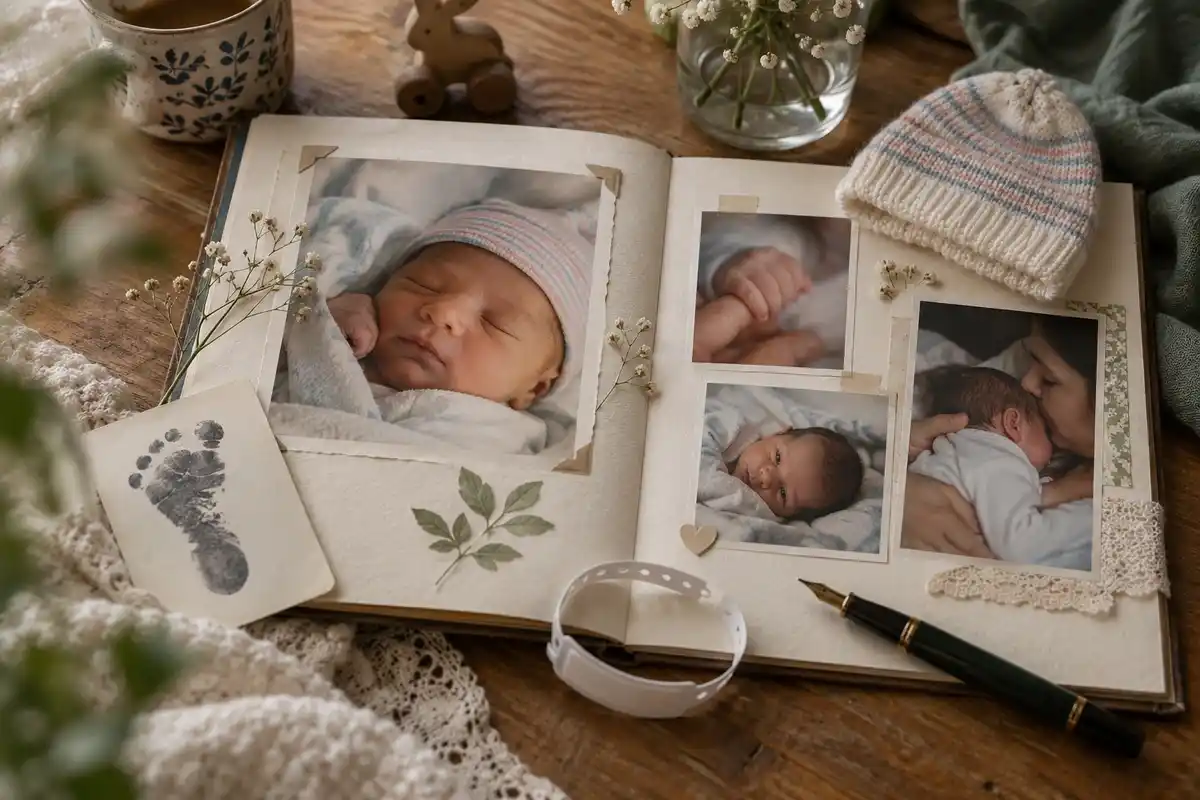
- Keepsakes: hospital bracelet, footprints, a lock of hair.
- Letters: one from each parent, written during the first year.
For page-by-page prompts, see what to write in a baby book.
Types of baby memory books
- Guided paper memory book: printed prompts for each month and milestone. Lovely, but fixed pages can leave gaps if you fall behind.
- Blank journal or scrapbook: total creative freedom, but more effort to start.
- Printed photo book: designed from your phone photos, usually once a year. Great visuals, less story.
- Digital baby memory book (app): quick entries from your phone, reminders, video and voice, private sharing with family and, often, export or print options.
Paper vs digital baby memory book: side-by-side
- Time per entry: paper takes 10 to 20 minutes with photos to print; digital takes under a minute from your phone.
- Photos and video: paper holds printed photos only; digital holds photos, videos and voice recordings.
- Sharing: paper lives on one shelf; digital can be shared privately with grandparents.
- Safety: paper can be lost in a move or damaged; digital is backed up, as long as you choose a service you trust and can export from.
- Feel: nothing beats holding a paper book; digital wins on convenience.
- Length: most paper books end at the first year; many apps continue through childhood.
A baby memory book that fits in your pocket. Childhood Milestones suggests ideas for your baby’s age and saves each first with photos, video and voice notes in seconds.
How to choose the right baby memory book
Ask yourself four questions:
- How much time will I realistically have? With a newborn, choose the fastest option you’ll actually use.
- Do I want video and voice? First laughs and first words are best heard, not described.
- Who else should see it? If grandparents live far away, private sharing matters.
- How long should it last? Choose something that can grow past the first birthday.

Our recommendation for most families is hybrid: capture moments digitally as they happen, then print a book of the highlights at each birthday. You get the speed of an app and a book your child can hold. Read more in our complete baby book guide.
Tips to actually fill your baby memory book
- Set a monthly reminder on your baby’s “month-day.”
- Capture now, polish later. A quick note or voice memo on the day beats a perfect page months later.
- Share the job with your partner and grandparents.
- Don’t aim for perfect. One photo and three sentences per month is a complete memory book.
The memory book you’ll finish
Paper-book feeling, app-level ease
Childhood Milestones combines age-based ideas, firsts with the date, photos, videos and voice notes in one private timeline from birth to 18.
Frequently asked questions
What should be in a baby memory book?
The birth story, monthly updates, milestones and firsts with dates, photos, family details, holidays, keepsakes like the hospital bracelet, and letters from parents.
Is a digital baby memory book better than paper?
Digital is faster, holds video and voice, and is easy to share and back up. Paper is tangible and beautiful but harder to keep up with. Many families record digitally and print the highlights.
What is the difference between a baby book and a baby memory book?
The terms are often used interchangeably. Both record your baby’s early years; “memory book” usually emphasizes keepsakes, photos and stories.
When should I start a baby memory book?
During pregnancy is ideal, but you can start any time. If you’re behind, begin with today and fill in earlier months using your phone’s photos.

One Line a Day Journal for Parents: How It Works + 20 Prompts
How a one line a day journal works for parents, 20 one-line prompts and tips to make it a 5-minute habit.

Pregnancy Journal Prompts by Trimester (+ Weekly Template)
Pregnancy journal prompts for each trimester, partner prompts and a simple weekly template to record your pregnancy.

Baby Book: The Complete Guide to Recording Your Baby’s Story
Everything you need to record your baby’s story: what a baby book is, paper vs digital, what to include, what to record…
Eighteen years go faster than you think. Start saving their story today.
Discover meaningful things to do together, capture the milestones that matter and keep photos, stories and voice memories on one beautiful timeline — from birth to 18.