
Baby Book: The Complete Guide to Recording Your Baby’s Story
Everything you need to record your baby’s story: what a baby book is, paper vs digital, what to include, what to record each month and how to actually finish it.

Almost every parent starts a baby book with the best intentions. Then the sleepless weeks arrive, the book slides onto a shelf, and the pages stay blank after month two. This guide covers everything you need to record your baby’s story: what a baby book is, what to include, paper versus digital, and a simple system that helps you actually finish it.
Quick answer
A baby book is a keepsake that records your baby’s story, usually from pregnancy through the first year or beyond. Include the birth story, monthly updates, milestones and firsts, photos, keepsakes and letters to your child. To finish it, pick a format you’ll really use (paper, digital or both) and spend 10 minutes on the same day each month.
Key takeaways
- Most baby books stall because they ask for too much at once, not because parents don’t care.
- A monthly ten-minute habit beats an ambitious plan you can’t keep.
- Digital and paper aren’t rivals: capture daily on your phone, print the highlights.
- It’s never too late. You can fill in a baby book years later.
What is a baby book?
A baby book (also called a baby memory book or baby journal) is a record of your child’s earliest story: the pregnancy, the day they were born, how they grew and the little details that disappear fast. Unlike a photo album, it captures the why and how behind the pictures: what the first night home felt like, the nickname that stuck, the song that always calmed them.
It’s also one of the few things kids treasure as adults. A baby book answers the questions they’ll ask one day: “What was I like? What did I do? What did you feel?”
Types of baby books: paper, digital or both
- Guided paper book: pre-printed pages with prompts for each month and milestone. Beautiful and tangible, but easy to fall behind on, and hard to fix if you skip pages.
- Blank journal or scrapbook: total freedom, but no prompts, which makes it harder to start.
- Printed photo book: designed once a year from your phone photos. Great visuals, but little of the story behind them.
- Digital baby book app: record milestones, photos, videos and voice notes in seconds from your phone, with reminders and easy sharing with family. Some apps let you print the highlights later.
Many families find the best answer is hybrid: capture moments digitally as they happen, then print a book at the end of each year.
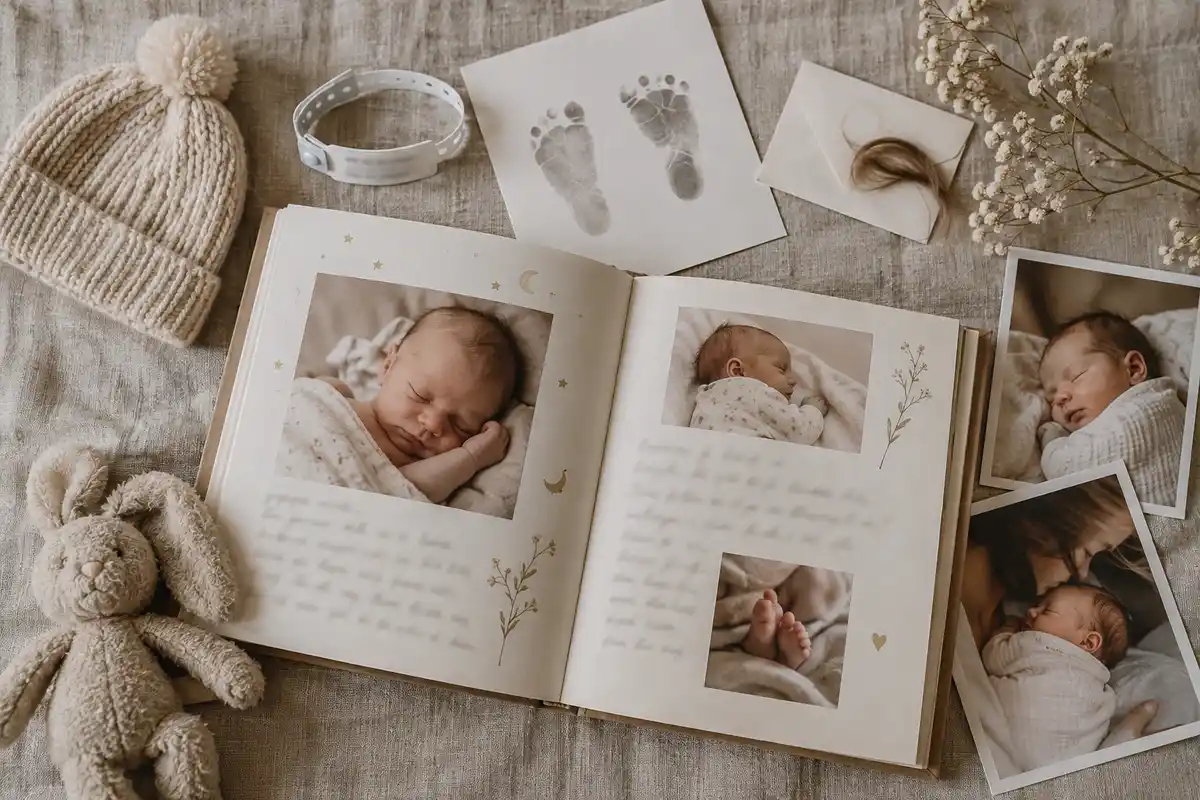
What to include in a baby book
- Pregnancy: how you found out, the first ultrasound, cravings, names you considered and how you announced it.
- Birth story: date, time, weight, length, where they were born, who was there and what happened, told in your own words.
- Coming home: the first night, the first visitors, what the house looked like.
- Family tree: parents, grandparents and siblings, with a photo of each.
- Monthly updates: one photo, size, new skills, favorite things and a line about what life was like.
- Milestones and firsts: first smile, laugh, roll, food, tooth, word and steps, each with a date.
- Personality: nicknames, songs that calmed them, funny habits, their favorite toy.
- Firsts in the world: first holiday, first trip, first time at the beach or in snow.
- Letters: a letter from each parent, and from grandparents if they’re willing.
- First birthday: the party, the cake, the guests and a reflection on the year.
For exact prompts for every page, see our guide on what to write in a baby book.
Want a baby book that grows as you go? Childhood Milestones suggests ideas for your baby’s age and saves each first with photos, videos and voice notes in seconds.
What to record in your baby’s first year
- Month 1: the birth story, feeding and sleep routines, who visited, first bath.
- Months 2–3: first social smile, coos, first outings. See our baby milestones guide for what to watch for.
- Months 4–6: laughing, rolling, reaching, first foods if your pediatrician says it’s time.
- Months 7–9: sitting, babbling, crawling or scooting, first tooth.
- Months 10–12: pulling up, cruising, waving, first words and the first birthday.
How to actually finish your baby book
Baby books rarely fail for lack of love; they fail because the system is too heavy for life with a newborn. Instead, try this:
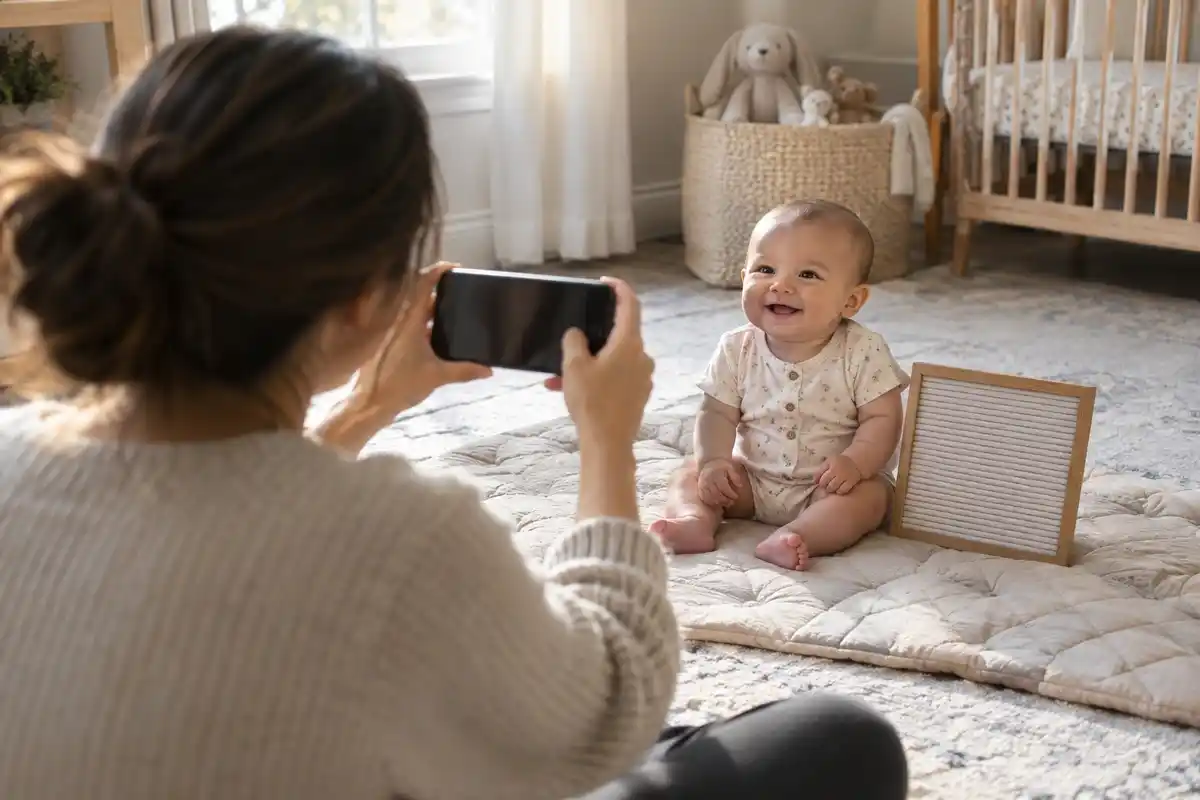
- Pick a monthly anchor. Use your baby’s “month-day” (the 14th, if they were born on the 14th) for a 10-minute update.
- Capture now, polish later. Write notes or record a voice memo the day something happens. You can make it pretty later.
- Lower the bar. One photo and three sentences per month is a complete baby book.
- Share the job. Partners and grandparents can add their own notes and photos.
- Print the highlights once a year. A digital record is safe; a printed book is something your child can hold.
Keepsakes worth saving
- Hospital bracelet and crib card.
- Footprints and handprints (newborn and at 12 months, to compare).
- A lock of hair from the first haircut.
- Ultrasound pictures (scan or photograph them, since they fade).
- Cards from family and friends.
- A newspaper front page or a list of what things cost the week they were born.
What if you’re months (or years) behind?
It’s not too late. Start with today: write down who your child is right now. Next, work backward using your phone’s photo dates, old texts and your social media posts, which are surprisingly good timelines. Then ask grandparents what they remember. A baby book finished at age five is still a priceless gift, and one finished at all beats a perfect one left blank.
Your baby’s story, kept
A baby book you’ll actually finish
Age-based ideas, firsts with the date, photos, videos and voice notes, all on one private timeline. Childhood Milestones makes your baby book a 10-minute habit.
Choosing between paper and an app? Our baby memory book guide compares both side by side, and what to write in a baby book has ready-to-use wording for every page.
Frequently asked questions
When should I start a baby book?
Ideally during pregnancy, when you have more time to fill in the early pages. Still, you can start any time, even years later.
What is the difference between a baby book and a baby journal?
A baby book usually has guided pages for milestones, photos and keepsakes. A baby journal is more free-form, focused on your thoughts and stories. Many parents combine both.
Is a digital baby book better than a paper one?
Digital is faster to update, holds videos and voice notes, and is easy to share. Paper is tangible and lasts without devices. A hybrid approach, recording digitally and printing yearly, gives you both.
How long should a baby book cover?
Most cover pregnancy through the first birthday. Many families continue with a yearly page or a memory book until age five or beyond.

One Line a Day Journal for Parents: How It Works + 20 Prompts
How a one line a day journal works for parents, 20 one-line prompts and tips to make it a 5-minute habit.

Baby Memory Book: What to Include + Paper vs Digital
What to put in a baby memory book, paper vs digital compared, and tips to choose and finish yours.

Pregnancy Journal Prompts by Trimester (+ Weekly Template)
Pregnancy journal prompts for each trimester, partner prompts and a simple weekly template to record your pregnancy.
Eighteen years go faster than you think. Start saving their story today.
Discover meaningful things to do together, capture the milestones that matter and keep photos, stories and voice memories on one beautiful timeline — from birth to 18.